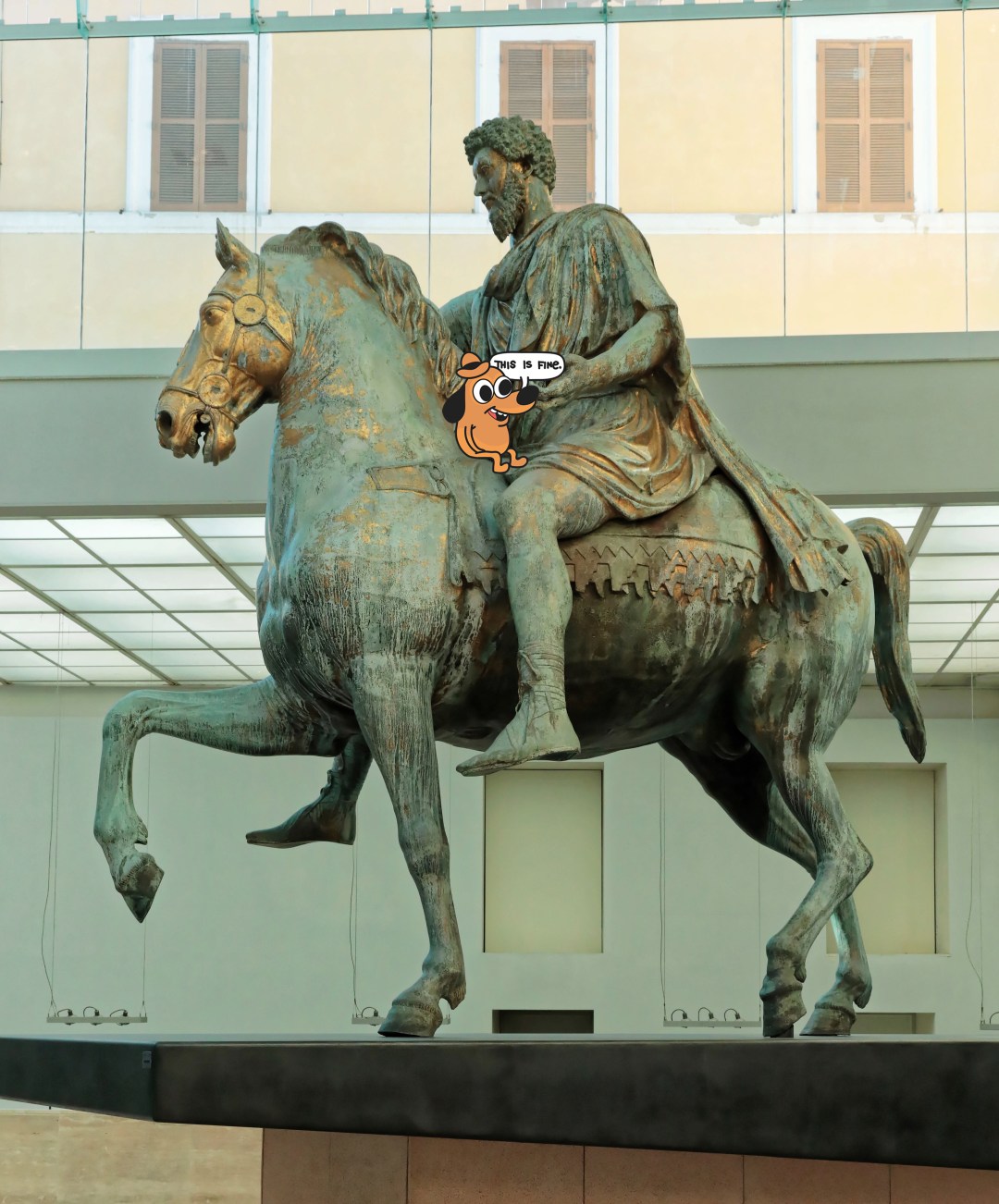
Stoicism has endured the test of time because it teaches us how we can cultivate calm and equanimity within, regardless of whatever chaos is happening outside in the world. It reminds us how brief our life is and to be grateful for it. It aims to get you to understand what is within your control and what isn’t, and that it’s imperative for you to only focus on the things that you can control and not worry about the things you can’t. It taught that it was important to focus on one’s character, that the most important thing is being a person of integrity and that everything else (wealth, status, objects, etc.) is secondary. The greatest stoic philosophers defined it simply as “living in virtue” or “living in accordance to nature”.
Here are the stoic principles that I come back to again and again:
Focus on the small things, on the actions you can take right now.
Successes are just the culmination of all the small decisions you make and the small wins you accumulate that eventually create the final product of ‘success’. We have tendency to set very big and lofty goals for ourselves, but we must look closer to our day to day: at tedious mundane things that you can add or take away on a daily basis that move you toward the bigger goal.
Example: food is a great test of self-control and temperance; every day you’re presented with the opportunity to make small decisions regarding food that will either move you towards optimal health or away from it.
Memento mori
“Remember that you will die”. You’re here right now and statistically speaking that is a rare thing. Not only that but you could die tomorrow. Shit, you could die later today! People die every day doing some of the things that you did today already and will continue to do constantly. Someone slipped in the shower and died, someone died in a wreck on the way to the grocery store. You also did those things and lived, but they didn’t. Meditate on that fact. When you acknowledge your mortality it makes you grateful for life itself, and detaches you from everything else that doesn’t really matter. It makes you see things through a different light.
Going along with the two points above remember that “everyday is a new life”. A bad day doesn’t have to mean a bad week. All previous actions from previous days are out of your control now and thus are not worth lingering on, you can only focus on now. The moment you wake up, keep in mind that today is a new day and what happened yesterday is no longer relevant, you must live in the current moment.
Shift the goal from the external to the internal.
Focus only on what you can immediately control; realize that the exact outcome of our actions aren’t within our power. To illustrate this, the stoics spoke about an archer aiming at a distant target. The second the arrow leaves their bow it is no longer in the archer’s control and is at the mercy of the elements, of fortuna. If they miss, all they can do is reassess and try again. Stoics place success on whether you did everything in your power to ensure that you shot well, not whether you hit the target or close to it. If we did our best that’s all anyone can ask for.
“Between stimulus and response there is a space. In that space is our power to choose our response. In our response lies our growth and our freedom.”
– Viktor Frankl
Another example: Wanna lose weight? Ask yourself what is under your control and what isn’t (what diet to do, when to eat, etc.). What’s not under your control (genes, my environment, early developmental experiences, etc.). Given that, what is up to me? The method, the protocol, and following that with deep focus and discipline. Will you lose weight? Perhaps, but if this strategy doesn’t work you can always reassess and try again.
Practice Non-attachment
Why do Stoics do things like cold showers, fasting, sleeping on the floor, etc.? Because it gives them perspective. Doing those things remind you that if you aren’t forced to do those things and are able to choose to do so that perhaps your life is good all things considered. And further, it shows them that if terrible things were to happen that they could live through it alright, it wouldn’t be as bad as their minds make it out to be. If you purposely put yourself in some discomfort, you will have a much higher tolerance than other people, you will be able to remain calm while others are losing their heads.
Another example of this is overcoming your ego. Your ego, your sense of who you are, is attached a whole bunch of things and these things run your life. If you purposely place yourself in situations that cause you embarrassment, you will slowly kill your need to gain approval from others. When you’re trying to make a big decision, you will follow your compass instead of worrying about what others think.
Journaling
Marcus Aurelius’s Meditations are just his thoughts and reflections. He would ask himself: What did I do well? What could I have done better? Where were my discipline and self-control tested, where did I do well? What did I do badly, why did this occur? Furthermore, how can I improve?
This practice ties everything together. It’s much easier to see your own BS when you write it down vs let it swirl around in your head. Some form of journaling and daily self-reflection would do wonders for you.
Conclusion
This isn’t a catch all, but it will help you notice what is going on within and eventually learn to manage your internal state which will reflect externally. Focus on mastering yourself and the external material world will reflect your reality.
Thanks for reading!

 The JJ Experiment